
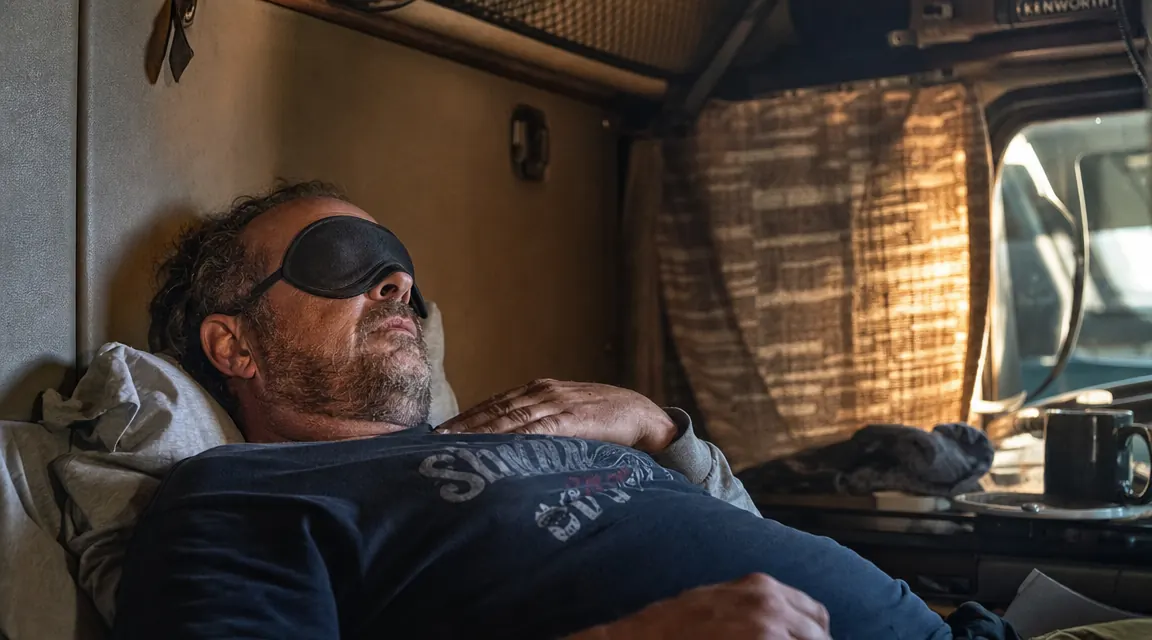
I have been driving long-haul routes across the country for eleven years. My home away from home is a 72-inch Peterbilt sleeper cab, and I have tried to sleep in every possible condition: rest stops in Phoenix at noon in August, truck parks in New Jersey with diesel engines cycling five feet from my bunk, motels where the curtains have a gap down the middle you could read a newspaper through. The single biggest variable that determines whether I get four usable hours or seven good ones is not the mattress, not the earplugs, not the melatonin. It is the light. Get the light wrong and nothing else matters.
Your brain treats light as a direct signal that it is time to be awake. The moment any photons reach your retinas, your suprachiasmatic nucleus starts suppressing melatonin. That is not a metaphor. It happens within minutes. Blackout curtains help at home, but in a cab or motel you rarely control the room. A properly fitted blackout sleep mask is the one piece of gear that travels with you and actually solves the problem. This guide walks through exactly how to use one, how to fit it right, and how to stack it with a couple of other tools so you are not still staring at the inside of your eyelids two hours later.
The mask I use on every run, at a price that makes it a no-brainer
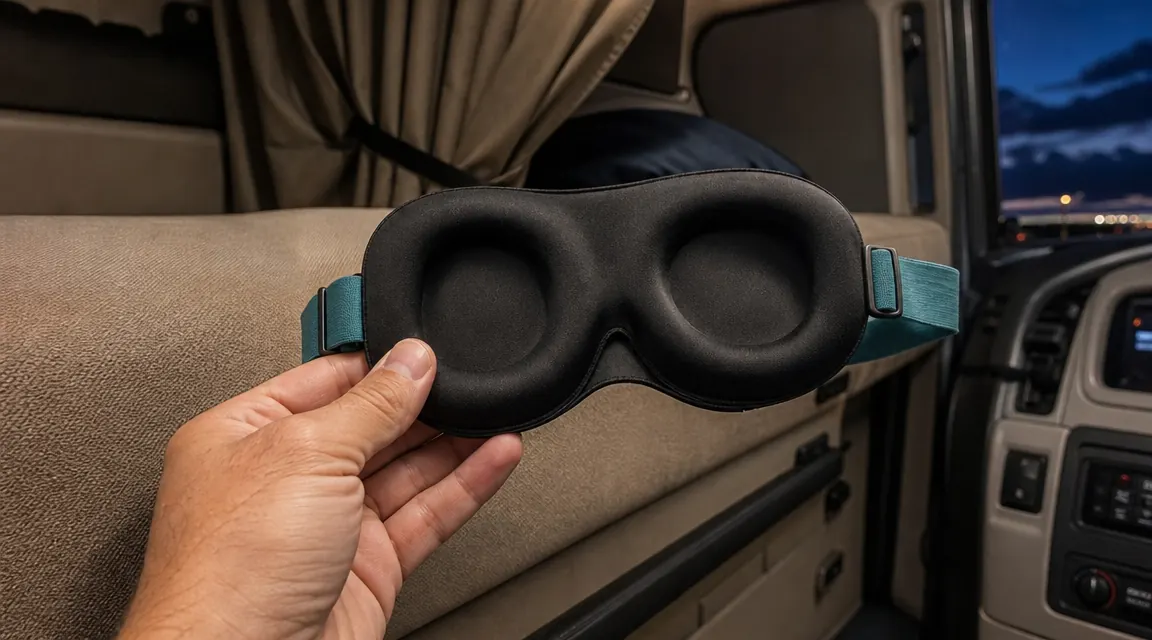
The MyHalos 3D Blackout Sleep Mask has been in my gear bag for over a year. The contoured eye cups mean zero pressure on my eyelids and zero light coming in from the nose bridge, which is where most flat masks fail. At the current price, it costs less than a bad cup of truck-stop coffee.
Amazon Check Today's Price on Amazon →Step 1: Understand Why Most Masks Fail Before You Even Put Them On
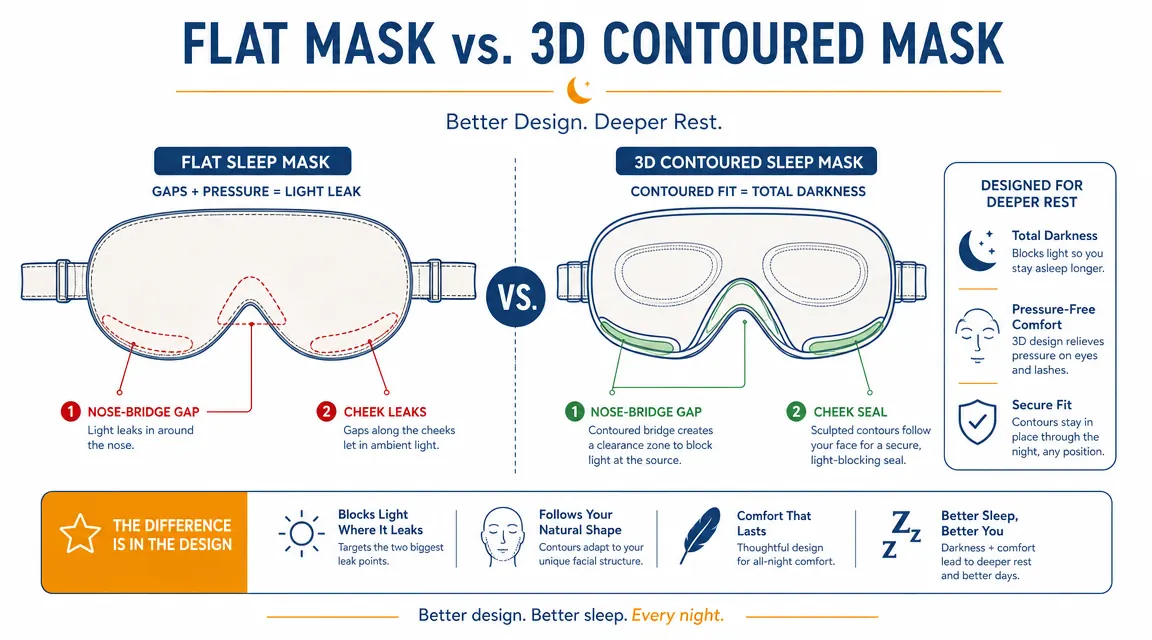
Most people who say sleep masks do not work for them have only tried a flat fabric mask, the kind that comes bundled in an airplane amenity kit. Those masks press directly against your eyelids under the weight of their own strap tension. That pressure is uncomfortable enough that you take the mask off at 3 a.m. without even realizing you did it. More importantly, flat masks fail at the nose bridge. Your face is three-dimensional. A flat piece of fabric cannot conform to the contour between your nose and your cheekbones, so light seeps in right at the bottom of the mask and hits the lower portion of your retinas. In a bright motel room or a cab parked facing east, that gap is enough to kill your melatonin cycle.
The fix is a 3D contoured mask. The rigid molded eye cups hold the fabric away from your eyelids entirely, which eliminates the pressure problem. The molded shape also creates a deeper seal around the nose bridge and cheeks. You will not get every photon, but you will get enough darkness that your brain stops fighting you. The MyHalos mask uses this 3D shell design and has a nose-bridge wing that folds down to close the gap that sinks most budget masks. That detail alone is why I carry it instead of the flat masks I used for the first seven years of driving.
Step 2: Fit the Mask Correctly Before Your First Night
Put the mask on while you are still sitting upright. Most people put it on lying down and immediately have it slightly off-center. With the mask on and the strap behind your head, adjust the strap so the mask rests against your face without pulling tight. It should feel like a light resting pressure, not a suction cup. If you feel the strap digging into the back of your skull, loosen it one notch. The mask stays in place through gentle contact around the perimeter, not through strap tension.
Check the nose bridge seal by cupping your hands over the sides of the mask and looking toward any light source. If you see a glow at the bottom of the mask near your nose, pinch the nose-bridge wing inward slightly against the bridge of your nose. It should click into a more sealed position. This takes about thirty seconds to dial in the first time and then you will know instinctively where it needs to sit. The MyHalos nose wing is adjustable, so do not assume the out-of-box position is the final position.
Side sleepers get one additional step. When you roll onto your side, most masks rotate slightly. Before you roll, grab the strap and slide it up about a quarter inch higher on your head than feels natural when sitting upright. Gravity will pull it back down into the correct position once you are on your side. This is the single most common mistake side sleepers make, and it is why they wake up with the mask around their chin and blame the product.
Step 3: Deal with the Nose Gap If Light Is Still Getting In
If you have done the fit adjustment and you are still seeing light bleed along the bottom of the mask, your nose bridge sits higher than average relative to your cheekbones. This is common in people with a narrower face. The fix is simple: fold a small strip of soft fabric, about the size of your index finger, and lay it across the bridge of your nose before putting the mask on. An old cotton sock cut into a strip works fine. The MyHalos nose wing presses against this added layer and the gap closes completely. I learned this trick from a fellow driver named Carl who runs the Dallas-to-Seattle corridor and cannot sleep without total blackout. He has been using this method for three years.
Some drivers also get light bleed from the sides near the temples. If that is your issue, the strap may be sitting too high. Pull it down so the strap crosses the widest part of the back of your skull, not the top. That rotation brings the side panels of the mask tighter against your temples and usually closes the side gaps entirely.
The mask is not the whole system. It is the foundation. Get the light handled first and everything else, the ear protection, the temperature, the mattress, becomes easier to manage.
Step 4: Layer in Ear Protection Because Light and Noise Are the Same Problem
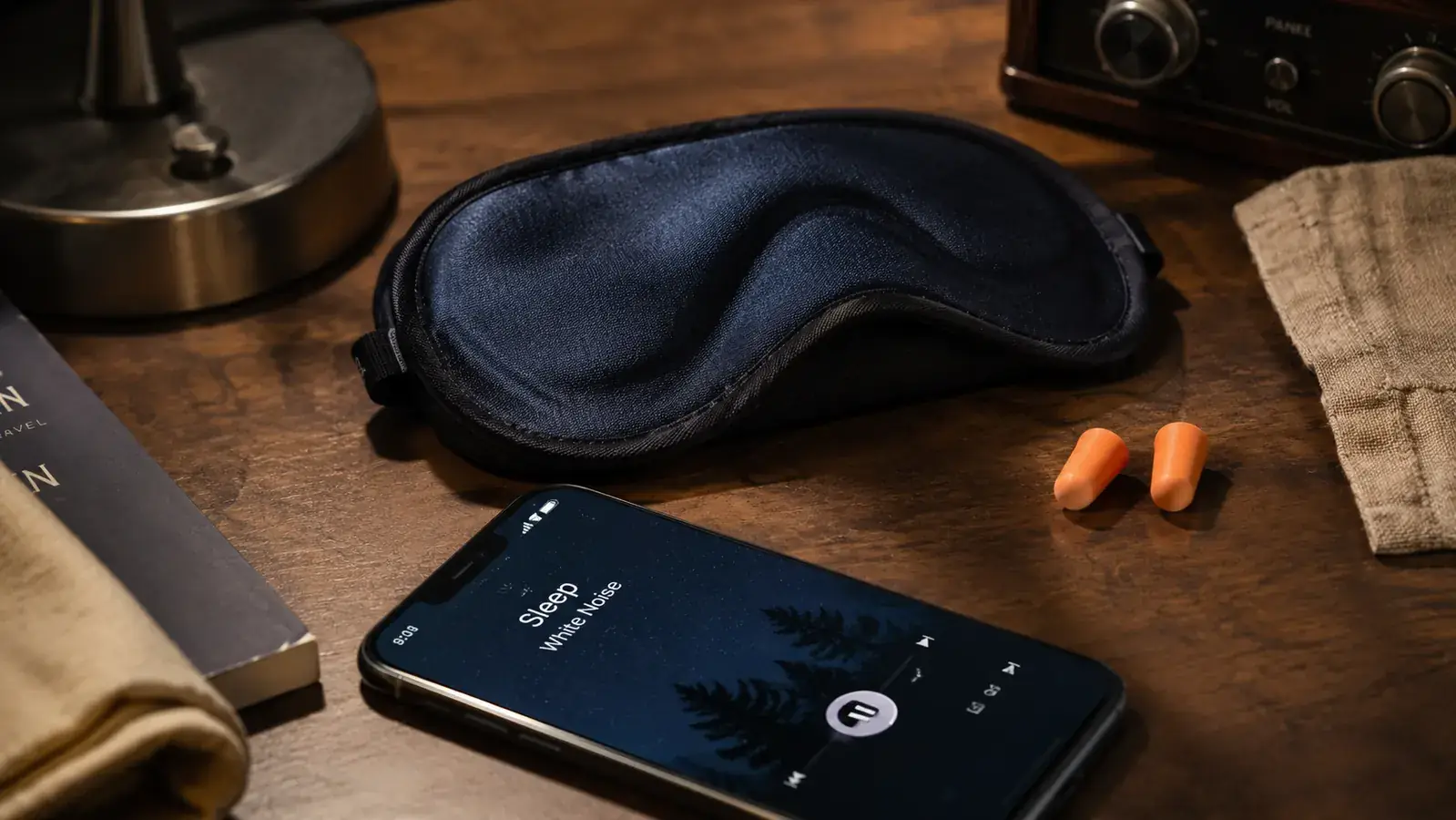
Driving teaches you fast that light and noise are equally hostile to daytime sleep. A truck park at noon has both problems at full strength. Once you have the mask seated correctly, add hearing protection. Standard foam earplugs with a noise reduction rating of 32 or higher are inexpensive and work well for most environments. Roll the earplug between your fingers to compress it, insert it with the tip pointed slightly toward the front of your ear canal, and hold it in for ten seconds while it expands. A lot of drivers skip that last step and then wonder why the plug falls out or does not block enough sound.
If foam plugs are uncomfortable after a few hours, silicone putty earplugs are an alternative. They sit in the outer ear rather than in the canal, so they work well for people who find foam plugs painful when sleeping on their side. The noise reduction is slightly lower, around 22 decibels, but for motel environments rather than a truck park they are usually sufficient. I keep both in my kit depending on where I am parked. In a noisy truck stop I use foam. In a motel with thin walls I use silicone.
Step 5: Handle the Practical Problems That Come Up After a Few Nights
Three issues come up consistently once people start using a 3D sleep mask regularly. The first is fogging. If you breathe through your mouth and the air is venting upward under the mask, the inside of the molded cups can get warm and humid, which is distracting. The fix is to breathe through your nose and make sure the bottom seal of the mask sits flat against your upper cheekbones. The molded cups in the MyHalos mask have enough interior space that fogging is minimal compared to flat masks, but the seal still matters. If you are a mouth breather, a thin nasal strip like Breathe Right can shift enough breathing to your nose to solve the fogging issue without any other changes.
The second issue is strap elasticity over time. Any elastic degrades. After three or four months of nightly use, you may notice the strap does not hold as snugly as it did at the start. The MyHalos strap is replaceable, but the simpler fix is to add a small knot in the strap at the adjustment point to take up the slack. That extends the usable life by another few months. When the molded cups themselves start to soften and no longer hold their shape, that is the signal to replace the mask. At the current price point, replacing it annually is less than most people spend on sleep supplements in a single month.
The third issue is skin irritation along the mask perimeter after heavy use. The contact fabric on the MyHalos mask is smooth and breathable, but if you run warm or you are parked in a hot cab, you may get some irritation along the nose bridge after extended wear. Wiping the contact surface with a damp cloth before sleeping and allowing it to air dry for a few minutes helps. Some drivers also apply a thin layer of petroleum jelly to the nose bridge before putting the mask on, which creates a barrier between the fabric and any sensitive skin.
What Else Helps When the Environment Is Really Fighting You
The mask handles the light. The earplugs handle the noise. But if you are parked at a rest stop in Texas in June and the cab is ninety degrees, you still have a temperature problem. Your core body temperature needs to drop one to two degrees to initiate deep sleep. In a hot cab, that does not happen no matter how dark and quiet you make the environment. A battery-powered USB fan aimed at your core, not your face, is the most practical cab solution. It also adds a layer of white noise at no extra cost, which masks the irregular sounds that are harder for your brain to ignore than constant engine hum.
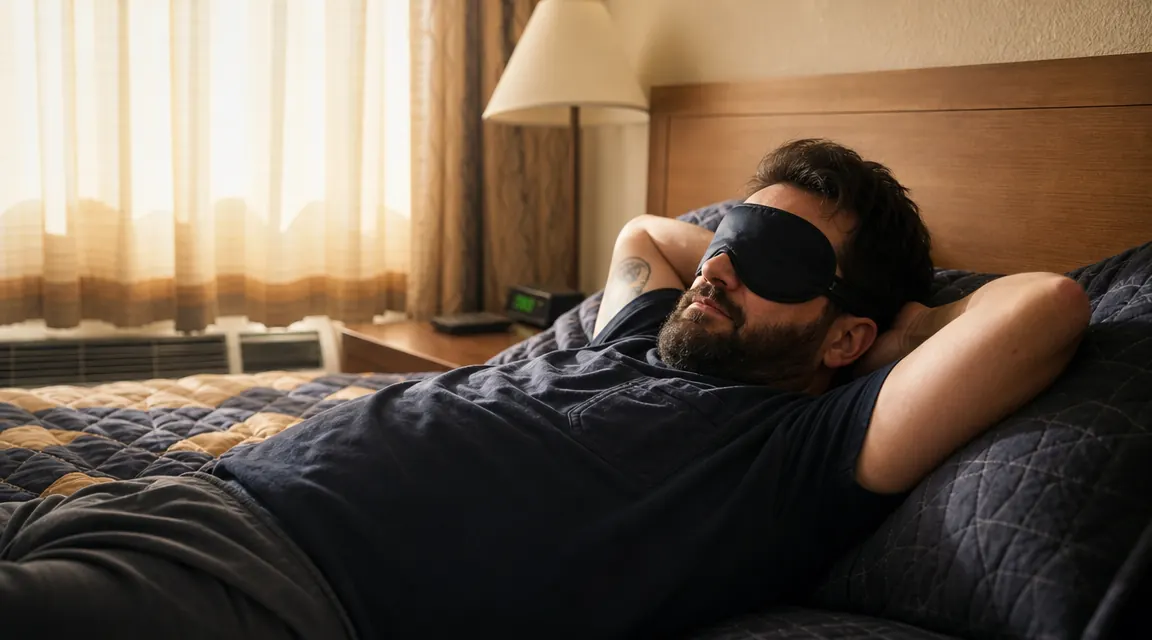
In motels, request a room away from the ice machine and elevator. That sounds obvious but most drivers forget to ask. A room on an upper floor facing away from the parking lot cuts the ambient noise significantly and reduces the headlight flicker problem that hits ground-floor rooms every time a truck turns in. If you get a room that is still too bright even with the curtains closed, a rolled bath towel along the bottom of the curtain where it meets the sill blocks the worst of the ground-level light leak.
For shift workers sleeping at home, blackout curtains are the right long-term investment for the room, but they take time to install and cost money. A sleep mask lets you solve the problem tonight without touching the room at all. Many shift workers I have talked to at truck stops use the mask even in a properly blacked-out bedroom because it signals to their brain that sleep is starting, regardless of time of day. The ritual matters. Putting on the mask becomes a cue, the same way a cup of coffee in the morning is a cue, except this one runs in the other direction.
Stop fighting the light and start getting the sleep you are owed
After eleven years on the road and probably a hundred nights in motels, the MyHalos 3D Blackout Sleep Mask is the one piece of gear I would not give up. Lightweight enough to forget it is in my pocket, durable enough for a year of nightly use, and dark enough to fool my brain into thinking it is midnight at noon. Check today's price on Amazon before you spend another night staring at the ceiling.
Amazon Check Today's Price on Amazon →