
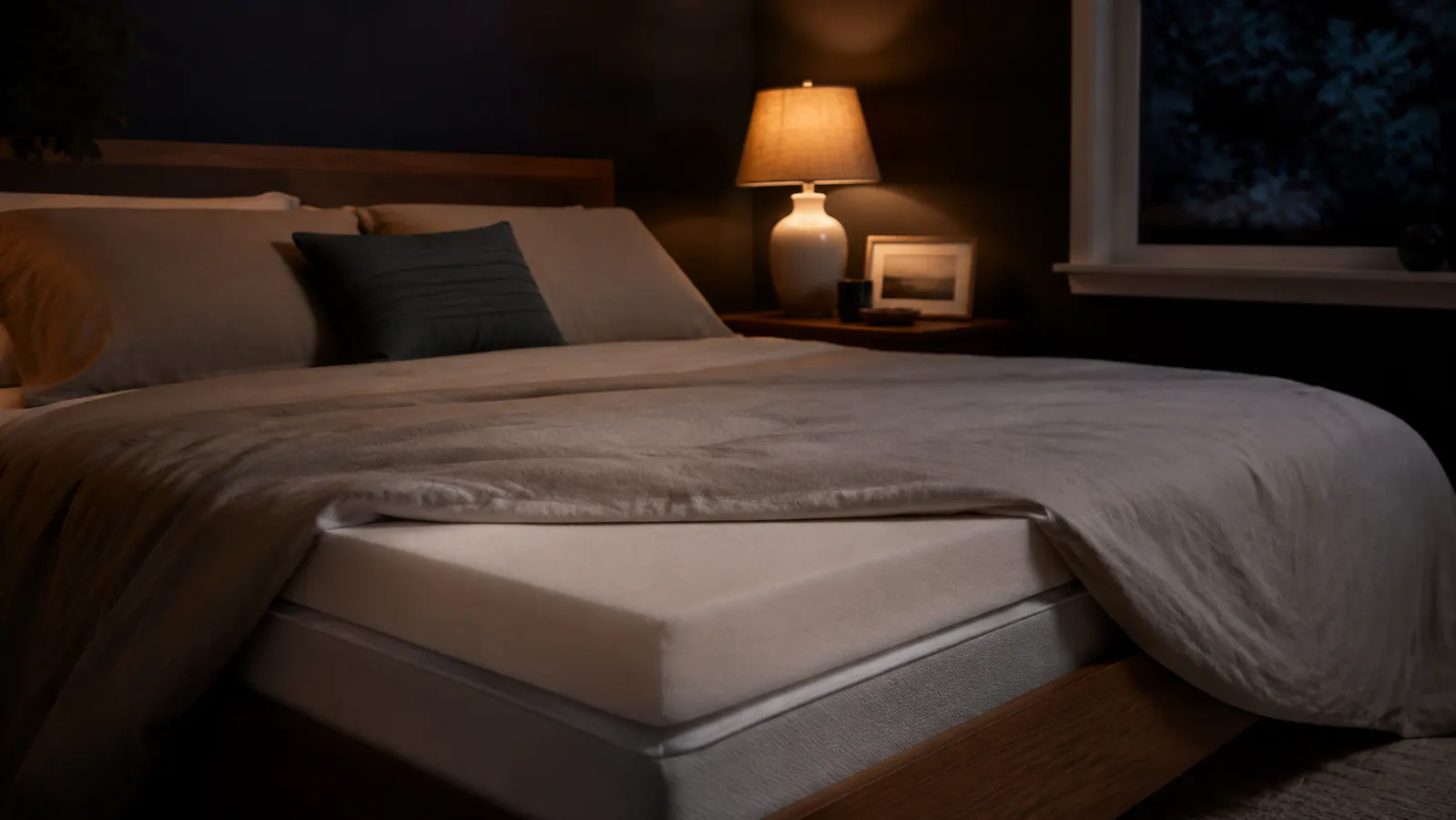
I drive a loaded flatbed from Atlanta to Los Angeles and back, every week. When I finally get home on a Thursday night, I have four days to sleep like a real human being before I do it again. For years, those four days were not much better than the sleeper cab. My mattress ran hot, I woke up at 2am soaked through my shirt, and I was back on the road running on empty. I tried cheaper sheets, a box fan pointed at the bed, and one of those ridiculous cooling pillows that cost $80 and felt like a wet gym towel by midnight. Nothing worked until I put the LUCID 3-inch Cooling Gel Mattress Topper on my queen bed in December of last year. I have been sleeping on it every night I am home since then. This is what a full year of use actually looks like.
The LUCID topper has 103,580 reviews on Amazon and a 4.4-star average. Numbers like that usually mean the product is fine, not great. After twelve months of testing it myself, I would say that rating is about right, but the details of when it works and when it does not are worth your time before you buy.
The Quick Verdict
A genuinely effective cooling topper for the first six to eight months. Performance softens after that, but at under $100 for a queen, the value-per-night math still holds up for most hot sleepers.
Amazon Check Today's Price →If you run hot at night and you have been putting this off, today's price on Amazon is still well under $100 for a queen.
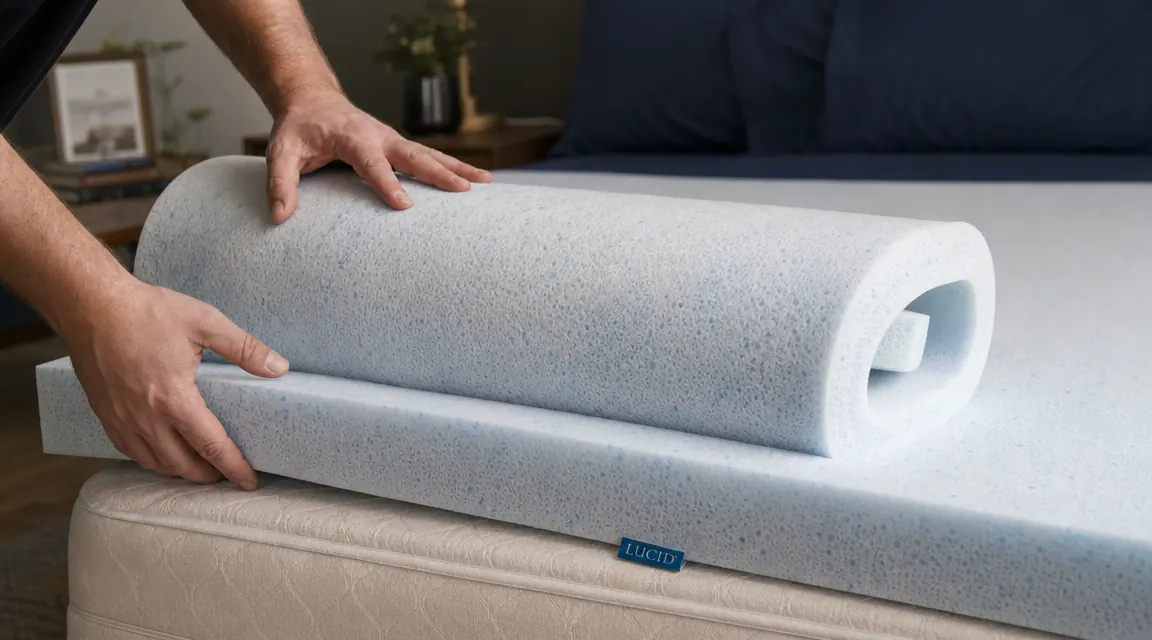
The LUCID 3-inch topper is the highest-reviewed cooling topper in its price range. It ships free and arrives compressed in a box. Give it 48 hours to expand fully before you judge it.
Amazon Check Today's Price on Amazon →How I Have Used It
I sleep at home roughly 14 to 16 nights per month. The rest of the time the topper sits on an empty bed. That lighter-than-average use schedule is actually useful information: it means the wear and breakdown I saw is not from someone sleeping on it every single night of the year. A daily-use sleeper might see the same performance curve in eight or nine months instead of twelve.
My setup: a ten-year-old Sealy Posturepedic queen that runs firm, a fitted sheet and a flat sheet over the topper, no mattress cover underneath. Room temperature hovers between 68 and 74 degrees depending on the season. I weigh 217 pounds, I sleep mostly on my side, and I run hot enough that my wife refused to share a duvet before we added this topper. She is a light sleeper who does not run warm. I was the problem. The topper was supposed to fix me.
First night: the topper expanded to its full 3-inch height within about 36 hours of unboxing (I left it 48 to be safe, as directed). There was a slight off-gassing smell for the first two nights, a mild chemical foam scent that was not overwhelming but was definitely present. By night three it was gone. If you are sensitive to smells, open a window.

Months One Through Six: What the Cooling Actually Feels Like
The first thing I noticed was that the surface does not feel cold, it feels neutral. That sounds like a small distinction but it matters. A lot of cooling products give you a brief cold-touch sensation that fades in about ten minutes, and then you are back to a normal mattress. The LUCID gel layer keeps the surface from trapping heat the way regular memory foam does. You are not lying on a cold slab. You are lying on something that does not heat up around you.
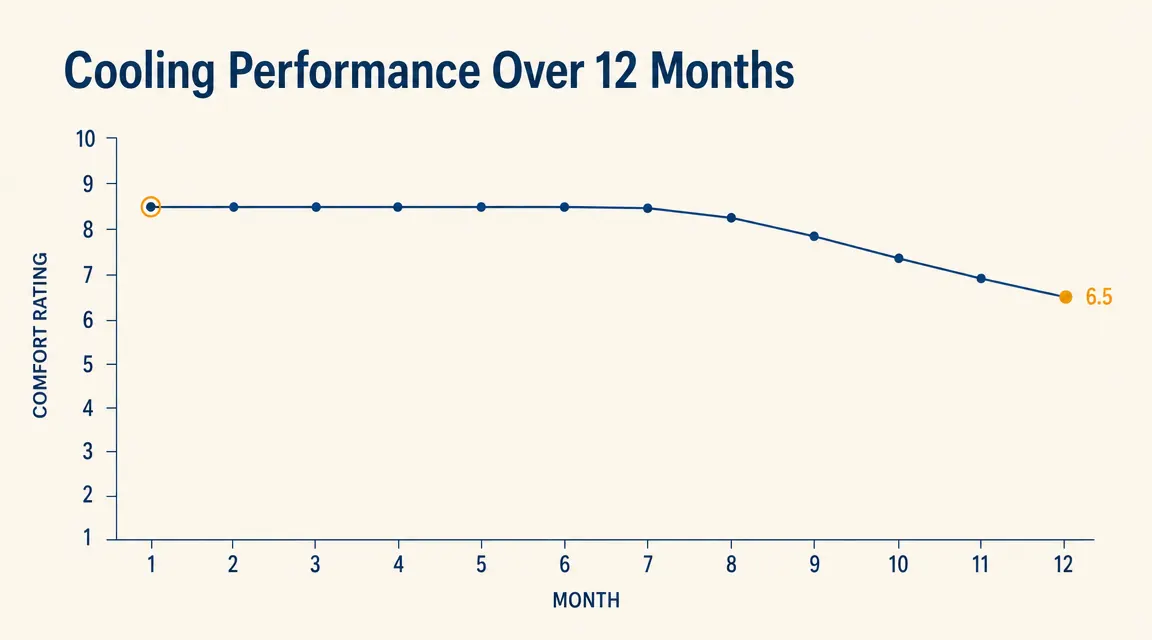
Through the first six months, I woke up sweating maybe twice that I can remember. Before the topper, two to three times a week was normal. That is a real improvement. My wife, who was skeptical, stopped complaining about the heat radiating from my side of the bed. She still uses a separate blanket but she stopped threatening to move to the guest room. I count that as a win.
The 3-inch thickness made a noticeable difference to the feel of the mattress. My Sealy runs firm, almost too firm for side sleeping. The topper added enough give at my shoulder and hip that I stopped waking up with that numb-arm situation I had been dealing with for two years. That is a pressure relief benefit on top of the cooling benefit, and it is worth calling out separately.
Months Seven Through Twelve: Where the Wear Shows Up
Around month seven I noticed the topper had developed a slight body impression on my side of the bed. Not dramatic, maybe a quarter to half an inch deeper than the rest of the surface. This is normal for memory foam. The question is whether it affected sleep quality, and the honest answer is: a little, yes. The pressure relief was still there. The softness was still there. But the cooling performance dropped off noticeably.
My theory is that the compression of the foam over time reduces the open-cell structure that lets air circulate, which is what the cooling depends on. By month ten I was back to waking up warm once or twice a week, not as bad as before the topper, but noticeably worse than months one through six. Month twelve is where I am now. It still beats nothing. It does not beat what it was at month three.
A few other durability notes: the cover that comes on the topper developed a small tear near the zipper by month eight. I left it in place and it has not spread. The foam itself has held its shape better than I expected. No crumbling or splitting, just the compression issue I mentioned.
Months one through six were genuinely good sleep. Month seven is when the foam started showing its age. I expected worse from a $99 product, but I also cannot pretend it performed the same at twelve months as it did at three.
The Cooling Gel Layer: What It Does and What It Does Not Do
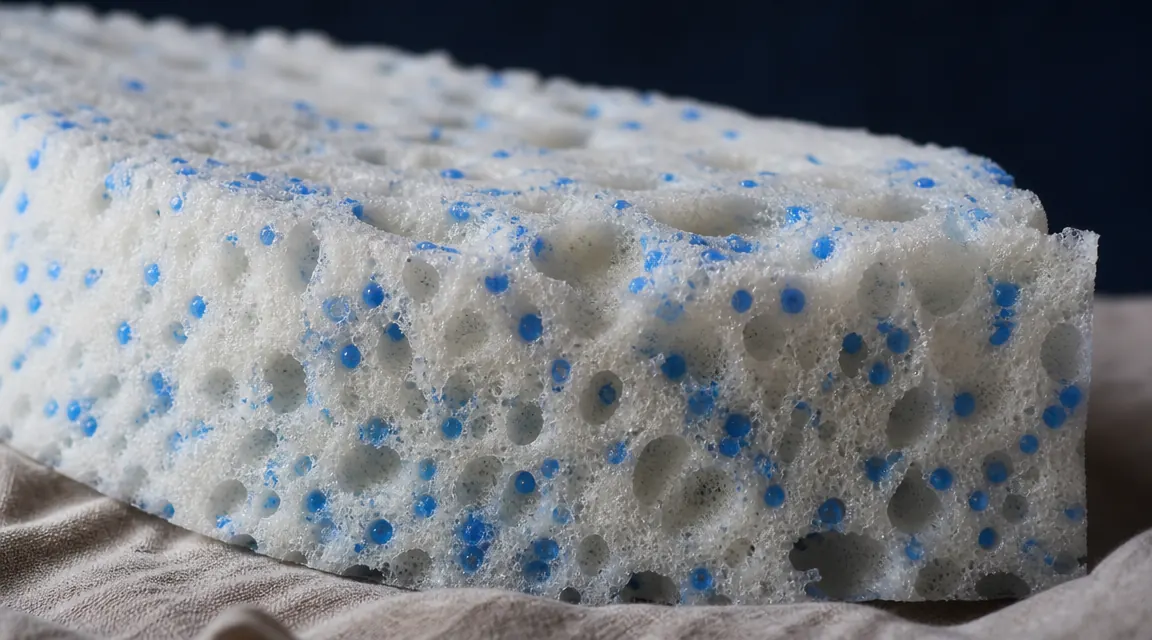
The gel in LUCID's topper is infused into the foam during manufacturing, not a separate gel layer on top. This means it distributes through the foam rather than sitting at one surface. The practical effect is that the cooling is moderate and consistent rather than intense and localized. If you need to actively cool down a hot sleeper in a warm room with no AC, this topper alone will not be enough. If your room is reasonably temperature-controlled and you just run warm from your own body heat, the topper handles that well.
I paired the topper with a bamboo-cotton sheet set starting around month two, and the combination made a meaningful difference over my old microfiber sheets. The topper does its job better when it has a breathable fabric layer on top. If you are sleeping on polyester sheets, swap those first before you blame the topper for heat issues.
What the 103,000 Amazon Reviews Do Not Tell You
The queen size topper is 60 inches wide. Standard queen mattresses are 60 inches wide. That should be a perfect fit but in practice I found the topper shifted slightly over the first few nights before settling into position. The non-slip bottom fabric does eventually grip the mattress surface, but the first week it moved around more than I liked. A fitted sheet held over the topper helps lock it in place.
Also: the 3-inch topper changes your bed height by a meaningful amount. My fitted sheet, which I had used for three years without issue, became too shallow to stay tucked after I added the topper. I had to buy deep-pocket sheets with at least a 15-inch drop. Check your sheet pocket depth before you buy.
One more thing most reviews skip: the topper is heavy. A queen size LUCID 3-inch weighs around 22 pounds. Getting it out of the compression-rolled box and onto the bed without help is doable but awkward. If you have a bad back or are working alone, clear the bedroom first and give yourself room to maneuver.
How It Compares to Alternatives I Considered
Before I bought the LUCID, I looked at the ViscoSoft Select High Density topper at $159, the Sleep Innovations 4-inch at $130, and the Saatva Graphite topper at $375. I went with the LUCID for one reason: the volume of long-term reviews. When you have 100,000 people who have been sleeping on something for a year or more, you can find patterns in the reviews that smaller-sample products cannot show you. The long-term wear pattern I described above is visible in the one-star reviews if you filter by date and read the complaints carefully. It was not a surprise to me because I had done my research. A $375 topper from Saatva may maintain its cooling performance longer, but I was not willing to spend four times more on an experiment.
For hot sleepers who want more longevity out of a topper, the LUCID 4-inch version (the same gel-infused foam at greater thickness) costs around $30 more for a queen. The extra inch of foam means the compression issue takes longer to develop. If I were buying again today, I would spend the extra $30.
What I Liked
- Genuine cooling in the first six to eight months, not just a surface-cold gimmick
- The 3-inch thickness adds meaningful pressure relief for side sleepers on a firm mattress
- Off-gassing resolved within three days
- Under $100 for queen size, which is hard to beat at this performance level
- 103,000 reviews means long-term failure patterns are well documented before you buy
Where It Falls Short
- Cooling performance declines noticeably after seven to eight months of regular use
- Body impressions develop on the most-used areas of the foam
- Cover zipper is not heavy-duty, mine tore slightly by month eight
- Requires deep-pocket sheets (15 inch minimum) due to the added height
- Heavy and awkward to set up alone at 22 pounds compressed
Who This Is For
The LUCID 3-inch gel topper is built for the hot sleeper who runs warm from body heat in an otherwise temperature-controlled room. If your bedroom is reasonably cool but you personally radiate heat and soak your sheets by 3am, this topper addresses the problem directly and cheaply. It is also a good fit for anyone sleeping on an older firm mattress who needs both cooling and pressure relief without the cost of a new mattress. If you are a shift worker or someone whose sleep schedule is irregular and you need every hour of home sleep to count, the early months of this topper are genuinely good. Spend the extra $30 on the 4-inch version if you want that window to last longer.
Who Should Skip It
Skip it if your room itself is hot. If you live without AC in a warm climate or your bedroom runs above 75 degrees at night, a mattress topper will not compensate for ambient heat. You need to fix the room first. Also skip the 3-inch version if you are a daily sleeper who wants three or more years of consistent cooling performance. The foam compresses and the cooling degrades. A latex topper in the $150-200 range holds up better over time, though it will not provide the same initial pressure-relief softness. And if you have a platform bed with close slat spacing, verify the slat gap before ordering any foam topper this thick, as thin slats can create pressure points that transfer through the foam.
A year in, I would still buy it again. The first six months alone were worth the price.
The LUCID 3-inch gel topper is still one of the best-reviewed cooling toppers under $100 on Amazon. If you are a hot sleeper who has been putting up with waking up drenched, today's price on Amazon makes this an easy call.
Amazon Check Today's Price on Amazon →