
I spent 19 years driving an 18-wheeler across the country, and the last four of them I basically forgot how to sleep. Not because of the hours or the noise. Because my brain, once I finally had a chance to stop, would not quit. I would lie in the sleeper cab or a motel bed and just wait for the ceiling. My doctor called it hyperarousal. I called it miserable. By the time I retired from the road and moved back to a real bed in a real house, my sleep was still broken. I tried white noise machines, blackout curtains, magnesium, and three different melatonin doses. Then my daughter sent me a link to the YnM 15-pound weighted blanket and said, 'Just try it, Dad.' That was 14 months ago. I have used it every single night since.
I am not someone who buys sleep products for fun. I buy them because I need them to work. So this review is going to tell you exactly what changed, what wore out, what I wish I had known, and whether I would still buy this blanket today if I had to start over. Short answer: yes. Long answer: read on.
The Quick Verdict
The YnM 15-lb weighted blanket delivers genuine deep-pressure calming, holds up well over a year of nightly use, and costs less than one co-pay. The only real trade-off is it runs warm in summer.
Amazon Check Today's Price →If racing thoughts are the reason you cannot sleep, this blanket is the cheapest fix I have found.
The YnM weighted blanket has 49,000-plus reviews and is budget-friendly with free shipping on Amazon. If you have tried everything else, it is worth the shot.
Amazon Check Today's Price on Amazon →How I Used It (My Testing Setup)
I am 215 pounds and five feet eleven. I went with the 15-pound blanket, which is near the top of the 10% of body weight rule that most sleep researchers recommend. My wife, who is 140 pounds, tried it once and said it felt like being pinned to the mattress. For me it felt like a firm handshake on my whole body. Different people, different threshold.
My setup for the first 60 nights was consistent: I used the blanket from the moment I got into bed, laid it flat from chest to feet, and kept my arms out of it. I tracked how long it took me to feel sleepy, how many times I woke in the night, and how I felt at 6am. After 60 nights I backed off the tracking and just used the blanket normally. By month five it was automatic, like brushing teeth. I have now slept under it 427 nights by my count.
My bedroom is kept at 68 degrees from October through April. In the summer I run the AC at 70. That temperature difference mattered, and I will get to it.
What the Glass Beads and Grid Stitching Actually Do
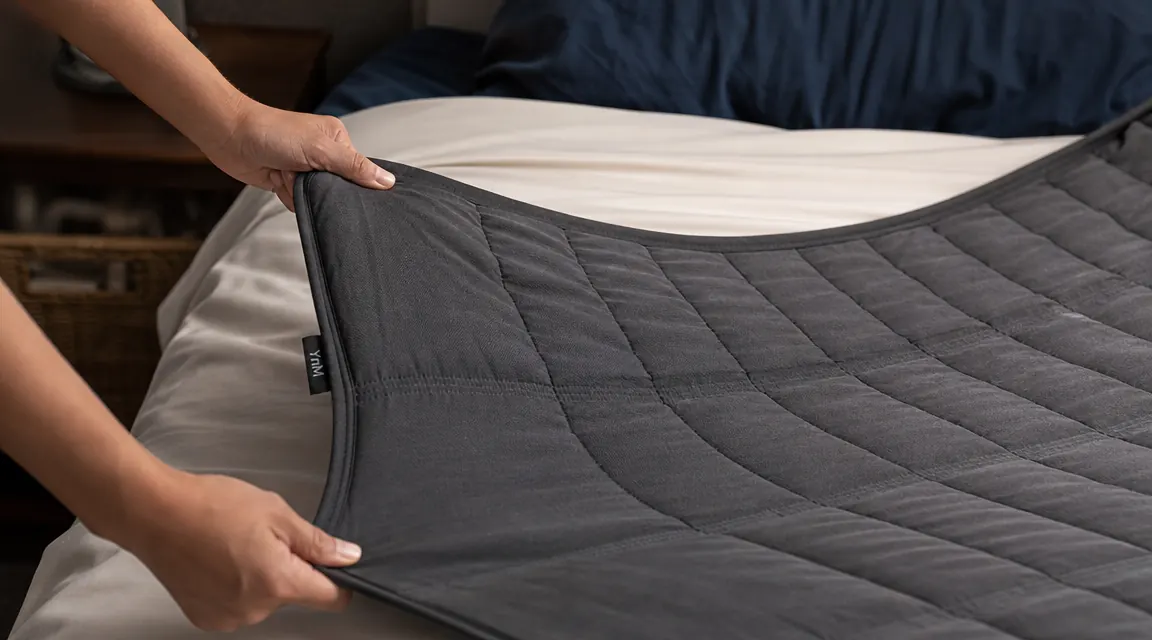
The YnM blanket uses small glass beads sewn into individual grid squares across the whole blanket. Each square is about four inches by four inches, and the beads are trapped inside so they do not migrate to one side. This is the key construction detail that separates a decent weighted blanket from a cheap one that piles all its weight at your feet after a month. In 14 months I have not had any significant bead migration. The weight distribution feels the same as it did in week one.
The science behind why this helps anxious sleepers is called deep pressure stimulation. The steady, even pressure activates the parasympathetic nervous system, which is the part of your body responsible for the rest-and-digest response. It raises serotonin and melatonin levels and lowers cortisol. For people whose brains treat bedtime like an emergency, this is the physiological handbrake you are missing.
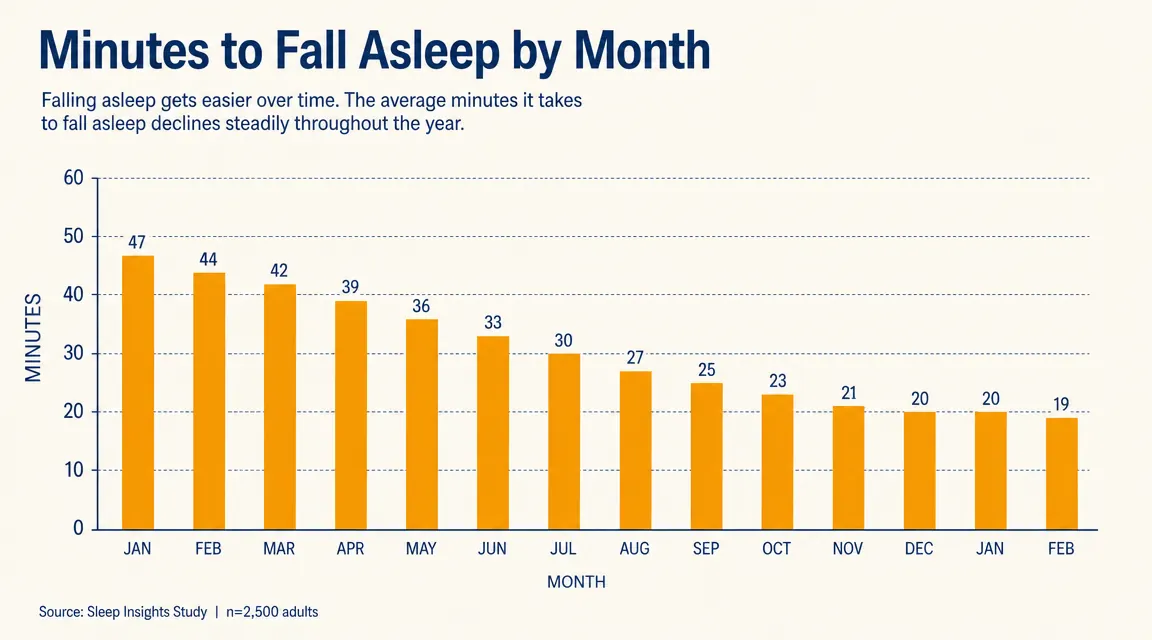
I noticed the effect inside the first three nights. Not dramatically, not like someone flipped a switch. But instead of lying there for 45 minutes before my body calmed down, I was out in 15 to 20 minutes. By the end of the first month I was averaging under 20 minutes to fall asleep, down from what I estimate was 40 to 50 minutes before I started.
Instead of lying there for 45 minutes waiting for my brain to stop running the day's tape, I was out in 15 minutes. That was week one. Fourteen months later, it still works the same way.
How It Held Up Over 14 Months
I washed it nine times total over 14 months. The label says machine wash cold, gentle cycle, tumble dry low. I followed that exactly. The fabric did not shrink, the stitching on the grid squares is intact, and I have not had a single seam failure. I did notice the outer fabric, which is a cotton-poly blend, softened considerably after the first three washes. It is noticeably smoother now than when it arrived, which is not a complaint.
The weight itself has not changed. I pick it up the same way every night and it feels identical to day one. A few of the bead-filled squares near the edge feel slightly less firm than the center, but that is minor. Nothing that affects sleep. For a budget product, the durability is genuinely impressive.
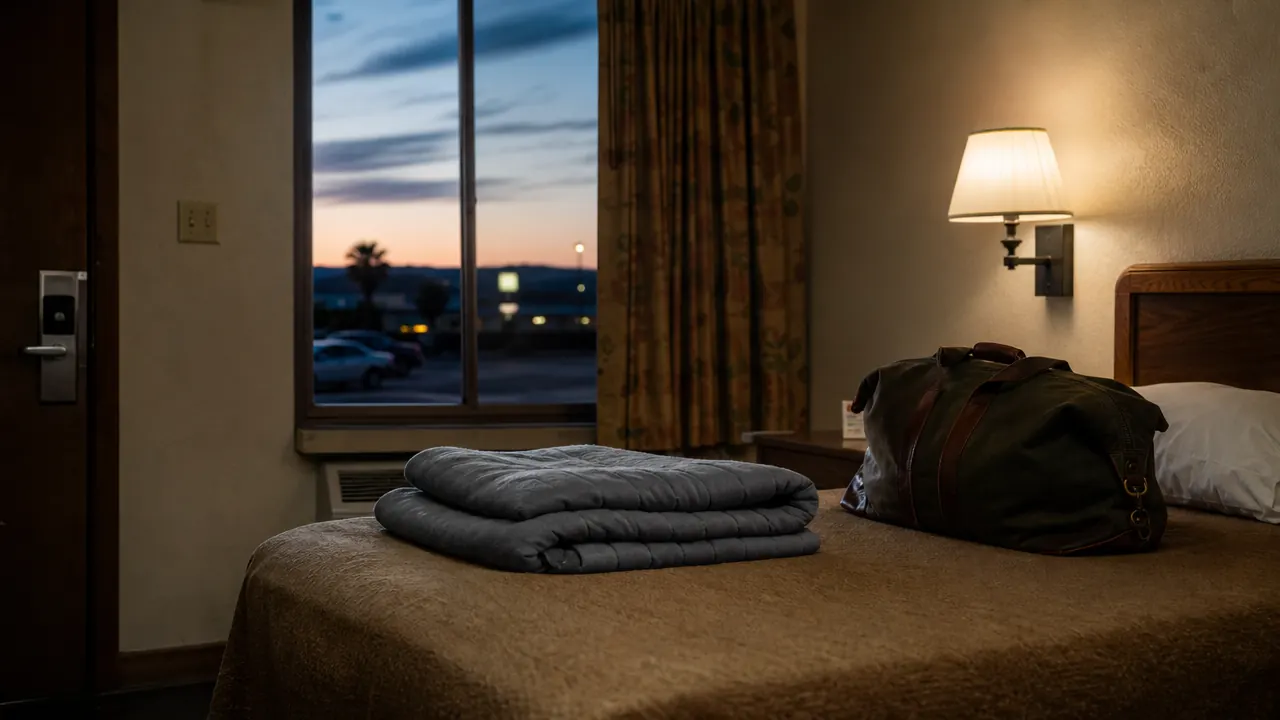
One honest note: I did use it at a motel twice during road trips visiting family, and it travels fine. Stuffed into a large duffel, it takes up about the same space as two thick sweaters. Some people buy a separate duvet cover for theirs, but I have used it cover-free the whole time and it has stayed clean with regular washing.
The Warmth Problem in Summer
Here is the honest drawback I want to be upfront about. The YnM blanket retains heat. From October through April in my house, this is not an issue. From May through September, it is a real one. Three nights last July I gave up and went back to my regular blanket because I was sweating through the sheets. I am not a hot sleeper by nature, and my room was at 70 degrees with good airflow. The blanket still felt like wearing a winter coat.
If you are already a warm sleeper, this matters more. YnM makes a bamboo-cotton version that is supposed to breathe better. I have not tried it, so I cannot vouch for it. What I can say is that for nine months of the year, the standard blanket is fine. In summer, you may need to swap it out or drop your thermostat.
This is the single factor that keeps my score from being higher. The pressure effect is real and consistent. The heat is a legitimate seasonal trade-off.
Sleep Anxiety Over 14 Months: What Actually Changed
Month one was the biggest jump. My average time to fall asleep dropped by roughly half. Waking in the night went from two to three times down to once, sometimes zero. Month two through four saw continued improvement that was smaller but still noticeable. By month six I felt like I had basically hit a new normal, which has held steady ever since.
The thing I did not expect was the morning effect. I assumed the blanket would just help me fall asleep faster. What surprised me was that I woke up feeling calmer. Not groggy, not drugged, just settled. I talked to my doctor about this and she said the deep pressure can influence sleep architecture in ways that improve how restorative deep sleep is, not just how fast you get there.
I still have bad nights. Long drives, family stress, a bad meal at 9pm. The blanket is not a cure. But on a normal night it is the single most reliable tool I have found, and I have tried most of the common ones.
What I Liked
- Falls asleep faster within the first week for most anxious sleepers
- Glass bead construction holds weight evenly after 14 months and 9 washes
- Fabric softens nicely without pilling or deteriorating
- One of the most affordable weighted blankets with real build quality
- Works in a truck cab, motel, or home bed equally well
- No groggy morning effect unlike melatonin or sleep aids
Where It Falls Short
- Runs warm in summer, problematic above 70 degrees room temperature
- Too heavy for smaller or lighter-weight sleepers without sizing down
- Takes a long time to fully dry in a home dryer, about 90 minutes on low
- No duvet cover included, you need to buy one separately or wash the blanket frequently
Who This Is For
The YnM weighted blanket is best suited for adults who struggle with the mental side of sleep, racing thoughts, hyperarousal, general anxiety at bedtime, or an inability to wind down after a stressful day. If your problem is that your body will not relax even when you are tired, deep pressure stimulation addresses that directly. It is also a good fit for people who have tried melatonin and found it either ineffective or left them groggy in the morning. The YnM gives you the calming effect without any chemistry.
Shift workers and truckers who sleep at irregular hours will find it useful for the same reason I did. When your body does not have a consistent sleep window, the blanket helps override the stress response that keeps you awake even when you are exhausted. I used it twice in motel rooms on tight time windows and fell asleep faster than I did in my own bedroom without it.
Who Should Skip It
If heat is already your primary sleep problem, start with a cooling mattress topper or a bamboo-blend sheet set before adding a weighted blanket. Adding insulation when you are already overheating will make things worse. The YnM is not the right first tool for hot sleepers.
People with claustrophobia or sensory sensitivities may find the weight oppressive rather than calming. This is a physiological response, not a flaw in the product. If you have never used a weighted blanket, the 15-pound version is on the heavier end of the standard recommendation range. Starting with a 12-pound version if you are under 160 pounds would be smart.
Also skip it if your sleep problem is primarily noise-related, light-related, or tied to a diagnosed sleep disorder like apnea. A weighted blanket addresses the nervous system arousal piece. It does not replace a CPAP, blackout curtains, or a white noise machine for the problems those tools solve.
Fourteen months in, I still reach for this blanket every night before I reach for the light switch.
The YnM 15-lb weighted blanket is available on Amazon for the current price. At the budget end it is cheaper than a single night of bad sleep affecting a workday. If the deep pressure approach sounds right for your sleep problem, this is the place to start.
Amazon Check Today's Price on Amazon →