
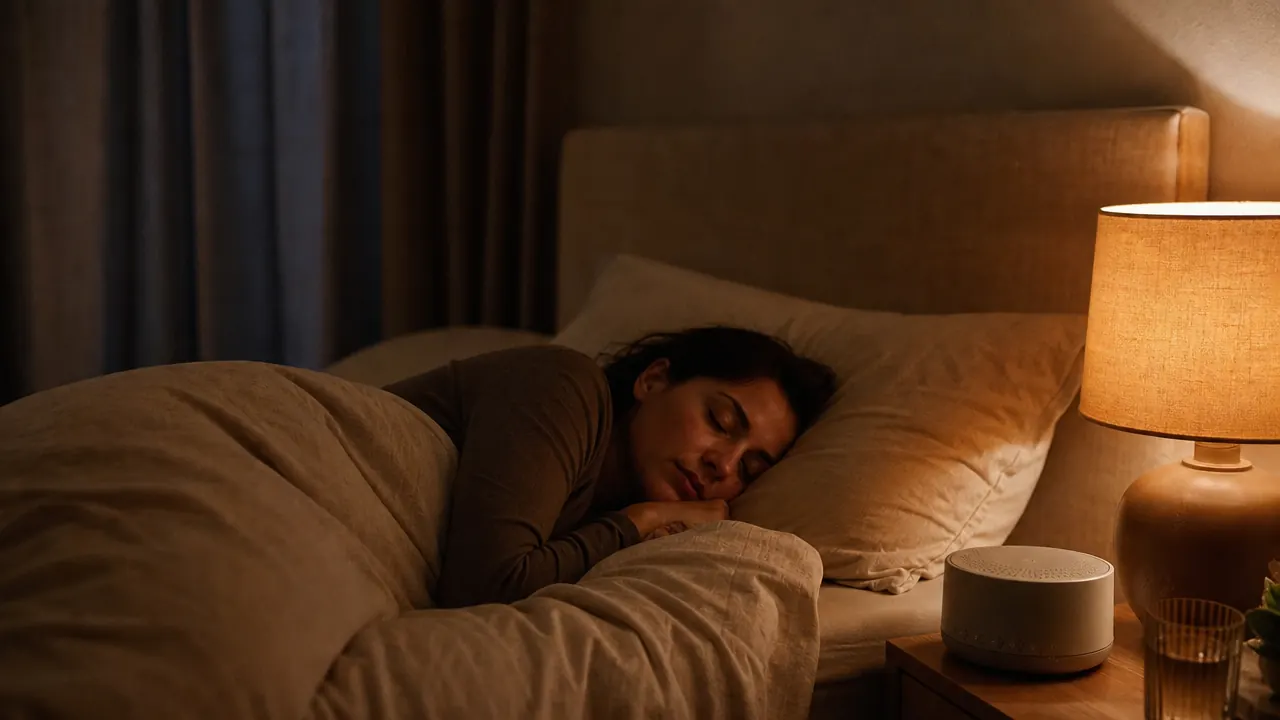
I have logged more than a million miles behind the wheel of a semi, and I can tell you exactly how much sleep I lost before I figured this out. Motels with ice machines outside the door. Truck stops where somebody is always pulling in at 2am with their jake brake howling. Rest areas where kids are running around at 6 in the morning and you have been on a night-driving schedule for three weeks straight. Noise is the single biggest sleep killer on the road, and it is not a whole lot better at home either once you move back to a neighborhood with dogs, traffic, and a partner who snores.
The fix is not earplugs alone, and it is not a sleep app on your phone either. Both help at the margins. But a dedicated white noise machine gives your brain something to lock onto so that random intrusive sounds stop piercing through. Your brain is wired to notice change. A steady, consistent background sound removes the contrast that makes a slam or a bark register as a threat. This guide walks you through exactly how to set one up correctly, because there is a right way and a wrong way, and most people who say white noise did not work for them were doing one of three things wrong.
If you want to skip ahead: the Yogasleep Dohm Classic is the machine I use every night and have recommended to every driver I know who asked.
It uses a real fan motor, not a looping digital file. That matters more than it sounds, and we will get to why in Step 2. Check today's price before you read the rest.
Amazon Check Today's Price on Amazon →Step 1: Identify What Kind of Noise Is Actually Waking You Up
Before you buy anything, spend one night paying attention to what actually pulls you out of sleep. Write it down on your phone if you have to. There are three categories of problem noise, and they have slightly different solutions.
Impact noise is the kind that travels through walls and floors. Footsteps from the apartment above you. A door slamming down the hall. A partner rolling over on a creaky frame. White noise masks this category well, but you may need a thicker pad under your machine to reduce vibration coupling if the noise is structural. Airborne noise is the kind that travels through the air and through thin walls. Voices, a TV in the next room, traffic outside a window. White noise handles airborne noise extremely well. Tonal noise is the hardest category. A dripping faucet. A neighbor's dog that barks at a specific pitch and stops. A truck idling at a fixed RPM. White noise helps here too, but you may need to add foam earplugs on bad nights. Knowing your noise type tells you how aggressive you need to be with volume, placement, and layering.
For most people reading this, the problem is a mix of airborne and tonal. That is the good news. Those two categories are the ones white noise machines were built to solve. If your primary problem is structural impact noise from above, you should also talk to your landlord, but the Dohm is still going to help at the margins.
Step 2: Choose a Mechanical Fan Machine Over a Digital Loop
This is where most people go wrong. They buy a Bluetooth speaker and run a white noise playlist from Spotify, or they get one of the cheap digital machines that stores twelve sound files and loops them every four minutes. The problem is the loop. Your brain picks up on the pattern. It might take fifteen minutes or it might take an hour, but once your sleeping brain notices the loop, the masking effect weakens. You start waking up at the seam of each cycle without knowing why.
A mechanical fan machine like the Yogasleep Dohm Classic generates sound through an actual spinning fan inside a housing with adjustable vents. The sound is genuinely continuous because it is the natural acoustic output of a motor, not a recording. There is no loop. The pitch and texture shift slightly in real time based on room temperature, fan speed, and how the vents sit, which means your brain never finds the pattern seam because there is no seam to find. The Dohm has been the benchmark in this category since 1962 and I do not say that as a marketing line. I say it because I have bought cheaper machines, used them for two weeks, and gone back.
If you are traveling and cannot carry anything with motor parts, the next best digital option is a machine with a true random noise generator rather than a stored loop. But at home, or in a truck cab with a USB inverter, the mechanical option wins.
Step 3: Place the Machine at the Right Distance and Height
Placement matters more than volume. I used to put mine on the dresser across the room and then crank it up to compensate. That is backwards. You end up with a machine that is too loud to be comfortable and still does not mask the noise source because the sound field is wrong.
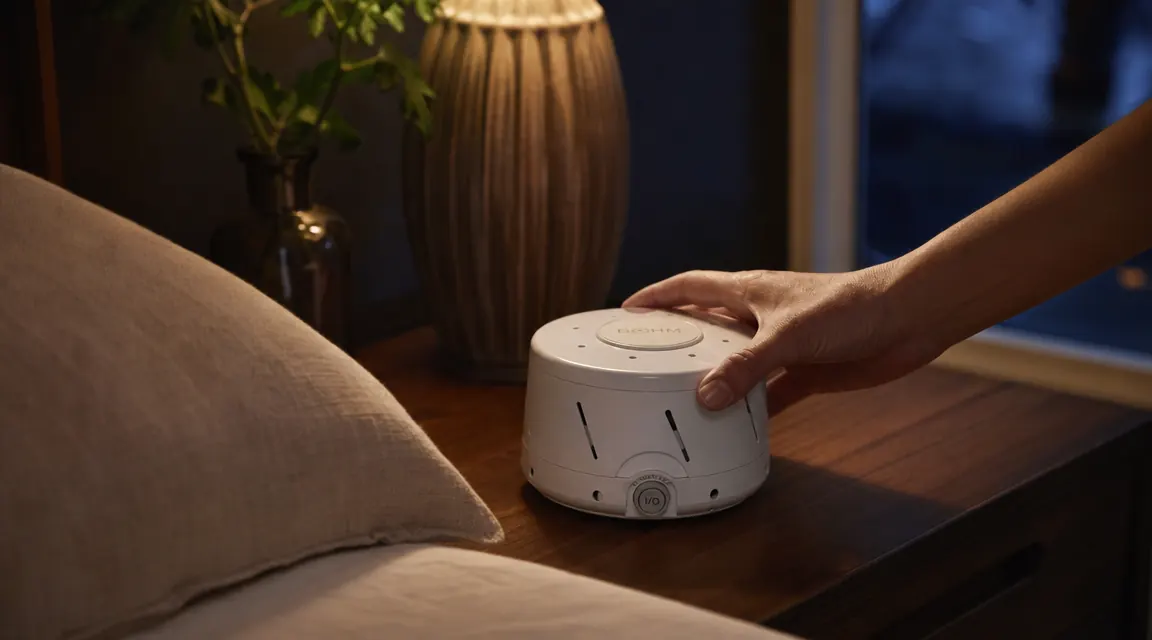
The target placement is three to five feet from your head, at nightstand height or slightly above. That puts the machine close enough to create a consistent sound field around your ears without being so close that it becomes another noise intrusion. The Dohm has a low-profile cylindrical shape that fits on most nightstands without taking up more than six inches of footprint. If you share a bed and do not want to put it directly on your partner's side, aim for the corner of the room nearest your head of the bed, elevated on a small shelf or stack of books. The goal is for the sound to reach you before it crosses a long open space where it disperses.
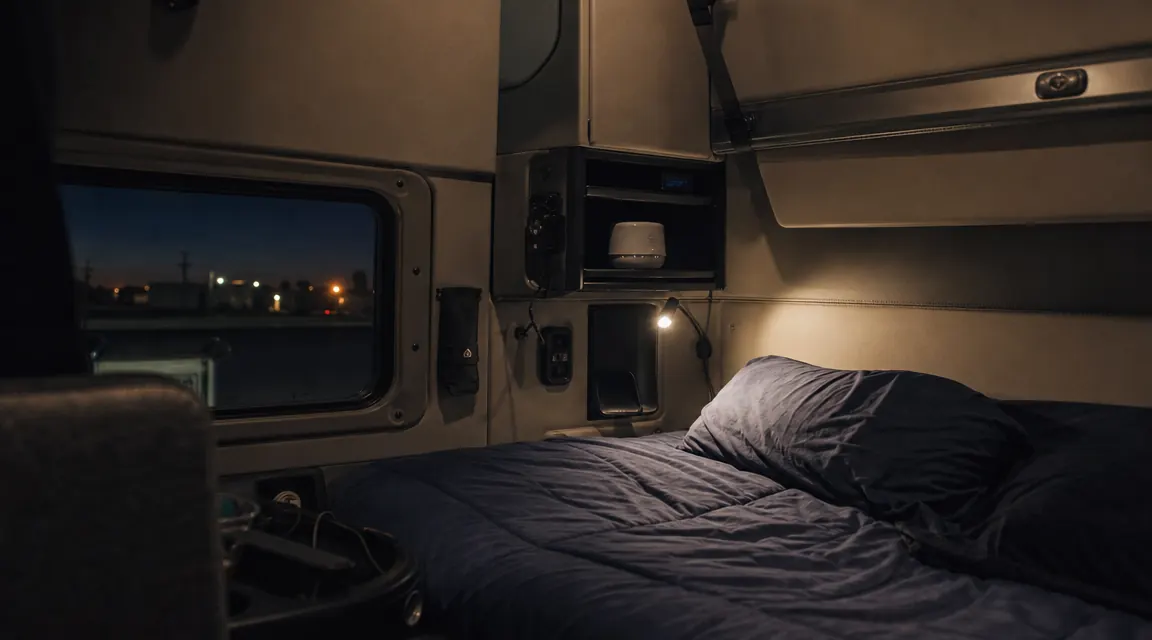
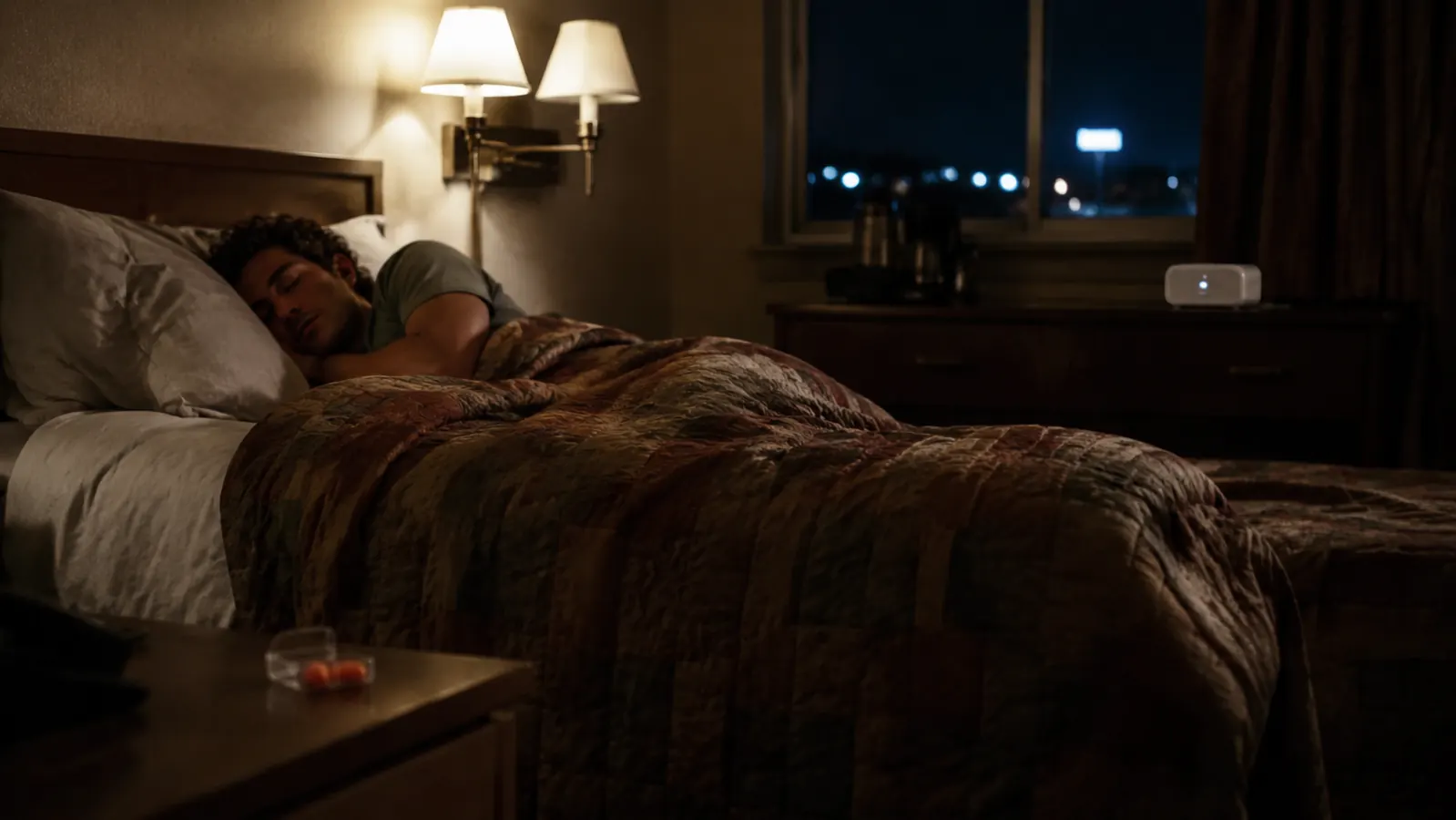
In a truck sleeper cab, I run the Dohm on the small shelf above the bunk, pointed toward the cab wall. That placement bounces the sound slightly off the hard surface and fills the cab more evenly than pointing it straight at my face. In a motel room, nightstand placement works well. Point the vented side toward the door or the wall where the noise is coming from.
Step 4: Dial In the Volume to the Masking Sweet Spot, Not Maximum
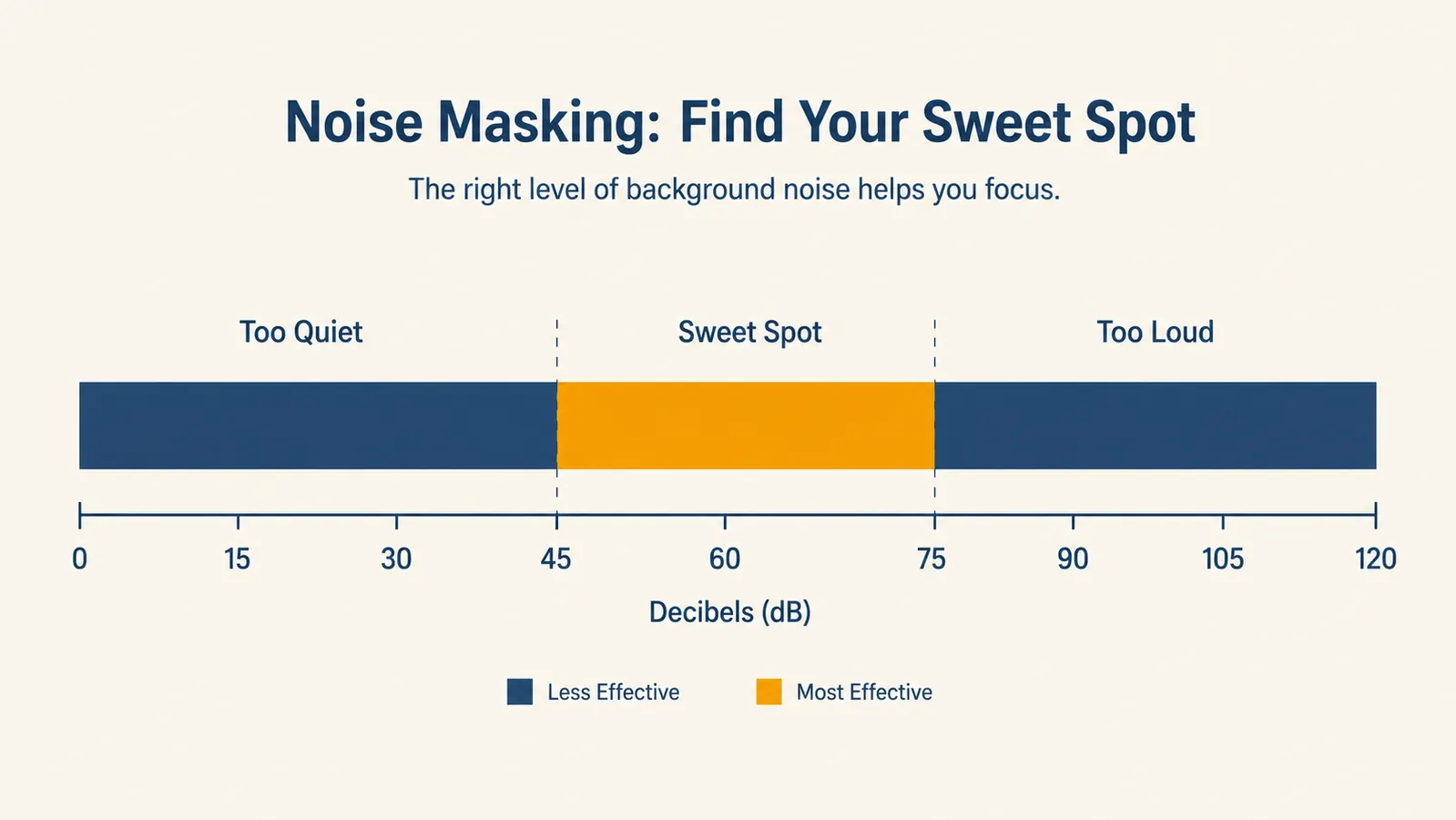
The masking sweet spot for most people is between 60 and 75 decibels at ear level. Below 60 dB the machine is not loud enough to cover a raised voice or a car horn. Above 75 dB you may mask the intrusive noise but the machine itself starts disrupting sleep by activating your auditory system too aggressively. Some people push it to 80 or even 85 dB because they have a loud neighbor and they figure more is better. That is a mistake I made for months. I was sleeping worse than I would have without the machine.
The Dohm has two speed settings plus the vent adjustment. Start on the low speed setting with vents halfway open. Lie down in your actual sleep position and listen for one minute. If you can still clearly hear a TV or traffic through the wall, open the vents a bit more or switch to high. If the machine itself starts to feel intrusive, back down. Most people find their setting in two nights and then leave it there forever. The vent system is what makes the Dohm worth the extra money over a basic two-button digital machine. You are tuning an actual acoustic instrument, not just choosing a volume level.
Most people who say white noise did not work set the machine too far away and the volume too high. Move it close, dial it back, and give it three nights before you judge it.
Step 5: Layer in One or Two Supporting Strategies for the Hardest Nights
On most nights the Dohm alone handles the job. But there are nights when the noise problem is severe enough that you need a second layer. On those nights I add foam earplugs rated at NRR 33. You do not need custom molded plugs. The cheap orange foam cylinders from any pharmacy, inserted correctly so they seal against your ear canal, reduce ambient sound by about 28 actual decibels in real-world use. Combined with the white noise machine, you are creating a very difficult environment for external noise to penetrate.
The second supporting strategy is room treatment. A rolled towel at the base of your door reduces airborne noise transmission significantly. Heavy curtains block both light and some sound. If you are in a motel and you cannot add curtains, hang an extra blanket over the curtain rod and tuck it against the wall. It looks strange but it works. On a truck, the sleeper curtain that separates the cab from the bunk does similar work if you pull it tight.
The third layer some people add is a sleep mask. Noise is not the only thing that pulls you out of deep sleep, and if light is also coming through the window, a blackout mask handles that piece while the Dohm handles the sound. I cover how to choose and use a sleep mask properly in a separate guide, but the short version is that a 3D contoured mask that does not press on your eyelids is what you want.
What Else Helps When the Noise Problem Is Really Bad
White noise machines address the masking side of the equation. But your nervous system's sensitivity to noise at night is also a factor on its own. When I was running particularly rough stretches of driving with bad sleep debt built up, I noticed that even moderate noise bothered me more than it would have on a well-rested week. Sleep debt raises your sensitivity to noise. The fix for that is not a louder machine. It is anything that helps your nervous system calm down before bed.
A weighted blanket, which provides deep pressure touch, can reduce nighttime cortisol enough that moderate noise stops triggering a full wake. Magnesium glycinate taken about an hour before bed supports the production of GABA, which is your brain's main calming neurotransmitter, and several drivers I know swear by it for staying asleep through disruptions that used to wake them. These are not replacements for the white noise machine. They are the full system that makes the machine work at its best.
I have also found that a consistent pre-sleep routine, even a simple one, makes a real difference when your sleep environment is noisy and variable. Fifteen minutes of reading with the Dohm running trains your brain to associate that sound with sleep onset. After a few weeks it becomes a reliable trigger. I started doing this in the truck and now I can fall asleep faster in a motel room than I used to fall asleep in my own house, simply because the machine is the constant and my brain knows what it means.
The Yogasleep Dohm Classic is the machine these five steps are built around. Real fan motor, no digital loop, two-speed plus vent adjustment, and a 60-year track record.
It packs flat enough for a travel bag and runs on a standard USB adapter if you are on the road. At today's price it is one of the most effective and durable sleep tools you can own outright, no subscription, no app, no batteries.
Amazon Check Today's Price on Amazon →