
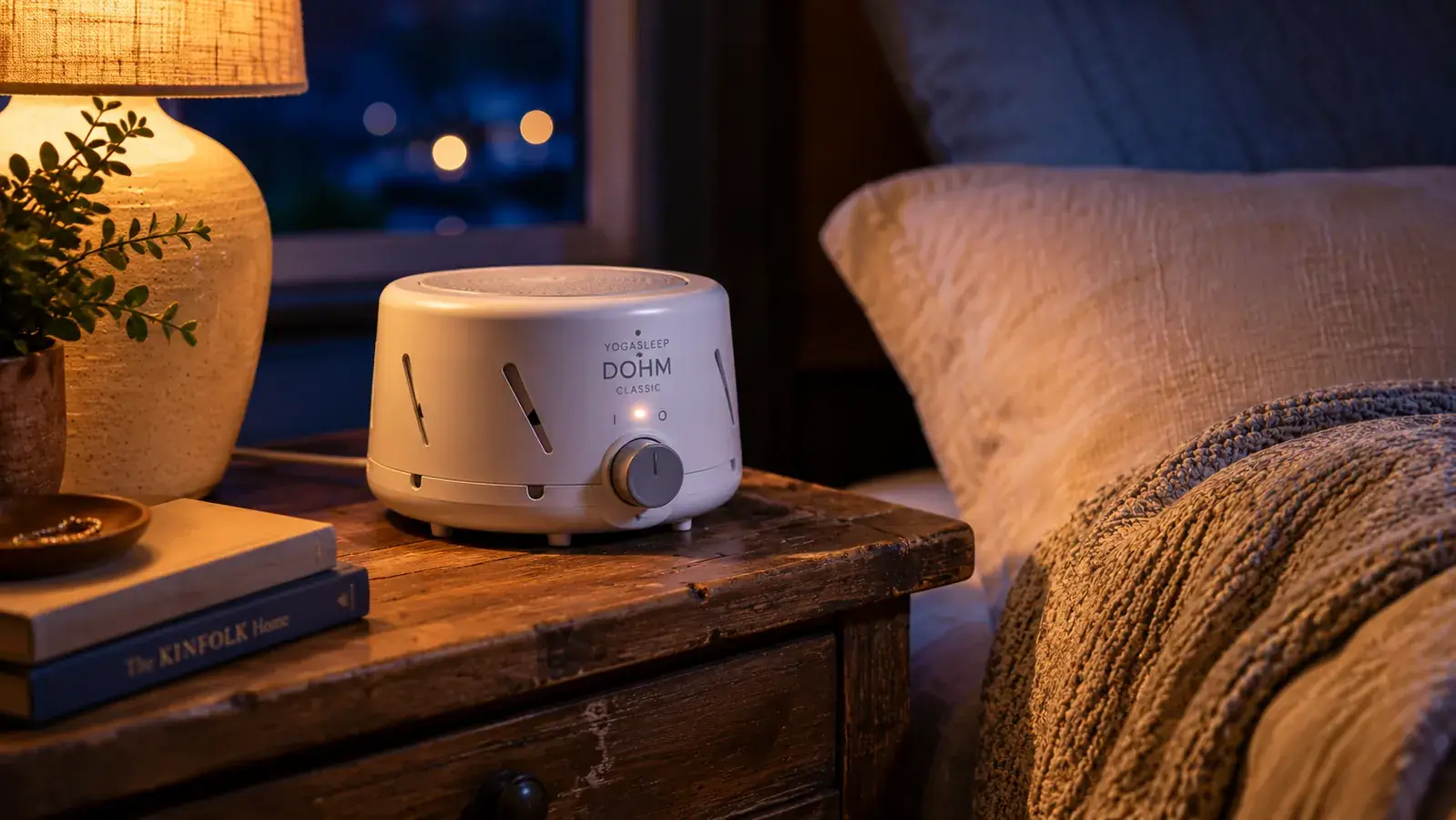
I drove over-the-road freight for eleven years before I bought the Dohm Classic. By that point I had tried every trick in the book for sleeping in loud places: foam earplugs that fell out by midnight, a white noise app on my phone that drained the battery and cut off when calls came in, a box fan pointed at the wall. None of it was consistent. None of it traveled well. The Dohm has now been running on my nightstand, and on the small shelf in my truck cab, for just over two years. What follows is not a first-week impression. This is a real accounting of what that machine sounds like after 700-plus nights of use, what it cannot do, and whether it is worth the current price for a light sleeper who cannot tolerate silence.
The short version: I would buy it again. But there are things I wish somebody had told me up front, and I am going to cover those honestly. The Yogasleep Dohm Classic (ASIN B00HD0ELFK) is a real-fan machine, not a digital loop, and that distinction matters more than most reviewers acknowledge.
The Quick Verdict
The most natural-sounding white noise machine I have used in two years of hard daily use, with a volume floor that is genuinely low enough for light sleepers, held back only by a narrow volume range and limited portability.
Amazon Check Today's Price →Still waking up to every car door and ice machine down the hall? The Dohm drowns it out with actual moving air, not a looping audio file.
Two years of nightly use and the motor is still quiet. Check today's price on Amazon and see why it has held a 4.6-star average across 40,000 reviews.
Amazon Check Today's Price on Amazon →How I Have Used It
My home bedroom is a converted garage in Knoxville, Tennessee. The insulation is serviceable but the neighbor's HVAC compressor sits about thirty feet from my window. Before the Dohm I was waking up two or three times a night when it cycled on. My wife, Dana, runs a normal sleep schedule, so me thrashing around at 3am was a problem for both of us. I set the Dohm on my nightstand, plugged it into the outlet behind the headboard, and dialed the top cap and side ring until I found a tone that masked the compressor's cycling frequency. That took about four nights of adjustment to dial in.
I also carry it on long hauls when I know I am going to be parked overnight in a truck stop or motel that books rooms facing a busy road. The Dohm is not a travel-designed machine. It is 3.3 inches tall and weighs under a pound, so it fits in a small gear bag, but the power cord is fixed and the voltage is North American only. It has traveled with me to maybe thirty different motel rooms over the past two years and has not given me a single problem.
Night temperatures in my bedroom range from around 62 to 74 degrees Fahrenheit across seasons. I mention this because there is a persistent question about whether the internal fan generates noticeable heat in a small room. In my experience, it does not. The exhaust is minimal and I have never noticed the room feeling warmer because of it.
What a Real Fan Sounds Like Compared to a Digital Loop
This is the thing most reviewers gloss over. When you play a white noise app on your phone, what you are hearing is a recorded audio file looping every few minutes. Most people cannot consciously detect the loop point, but there is evidence that your brain can, and many light sleepers report that digital loops feel 'thin' or that they stop working after a few weeks. I experienced this myself with two different apps before I switched to the Dohm.
The Dohm's sound is generated by a real motor spinning a real impeller behind two plastic baffles. Because the impeller is never in exactly the same position twice, the sound is genuinely non-repeating. There are micro-variations in the tone at all times. It sounds like an HVAC vent, but warmer and without the metallic edge. This is the core reason I kept it after the first week. It does not feel like a trick being played on my ears. It feels like ambient sound.
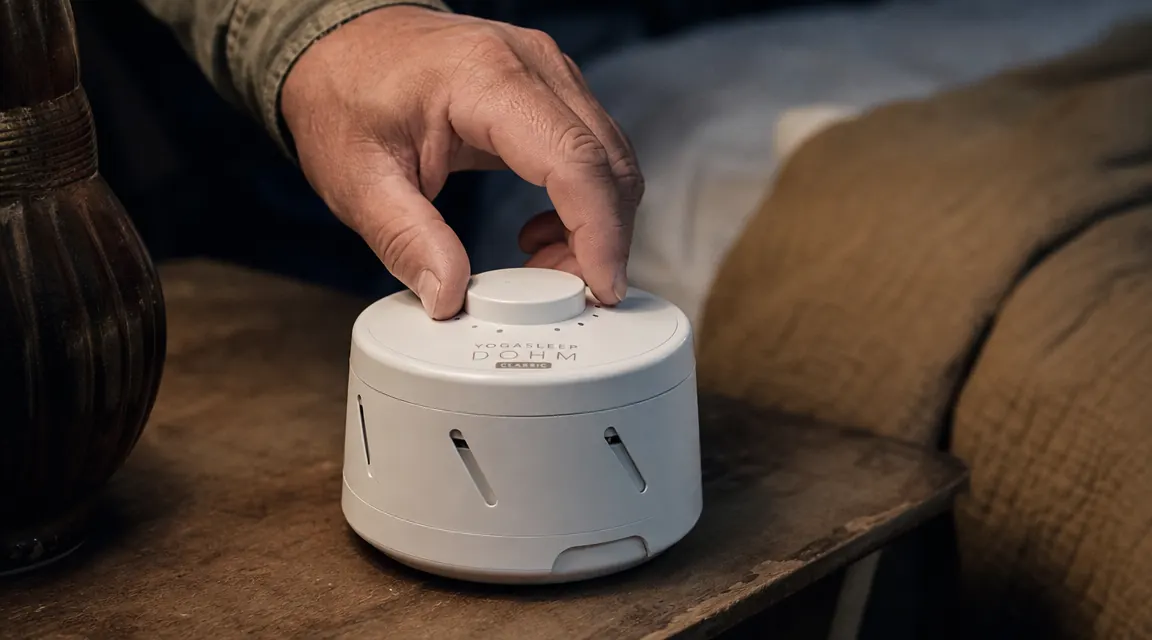
The Dohm has two speeds. Low is quieter and produces a deeper hum, around what I would call a soft rushing tone. High is louder and brighter, closer to a traditional white noise sound. Within each speed, you adjust the top cap (rotates to open or close the vents) and the outer ring (shifts the inner baffle position) to tune both the volume and the tonal character. In practice, this gives you a wide range of tones from a low deep rumble to a higher, airier sound. I settled on high speed with the cap about 60 percent open and the ring shifted about a quarter turn toward the louder setting. That combination covers the compressor noise outside without being loud enough to feel like I am sleeping next to a fan.
After two years the motor is still quiet and the tone has not changed. That matters more than any spec sheet because most reviewers only own it for a few weeks before writing their take.
Performance Over Two Years: What Has and Has Not Changed
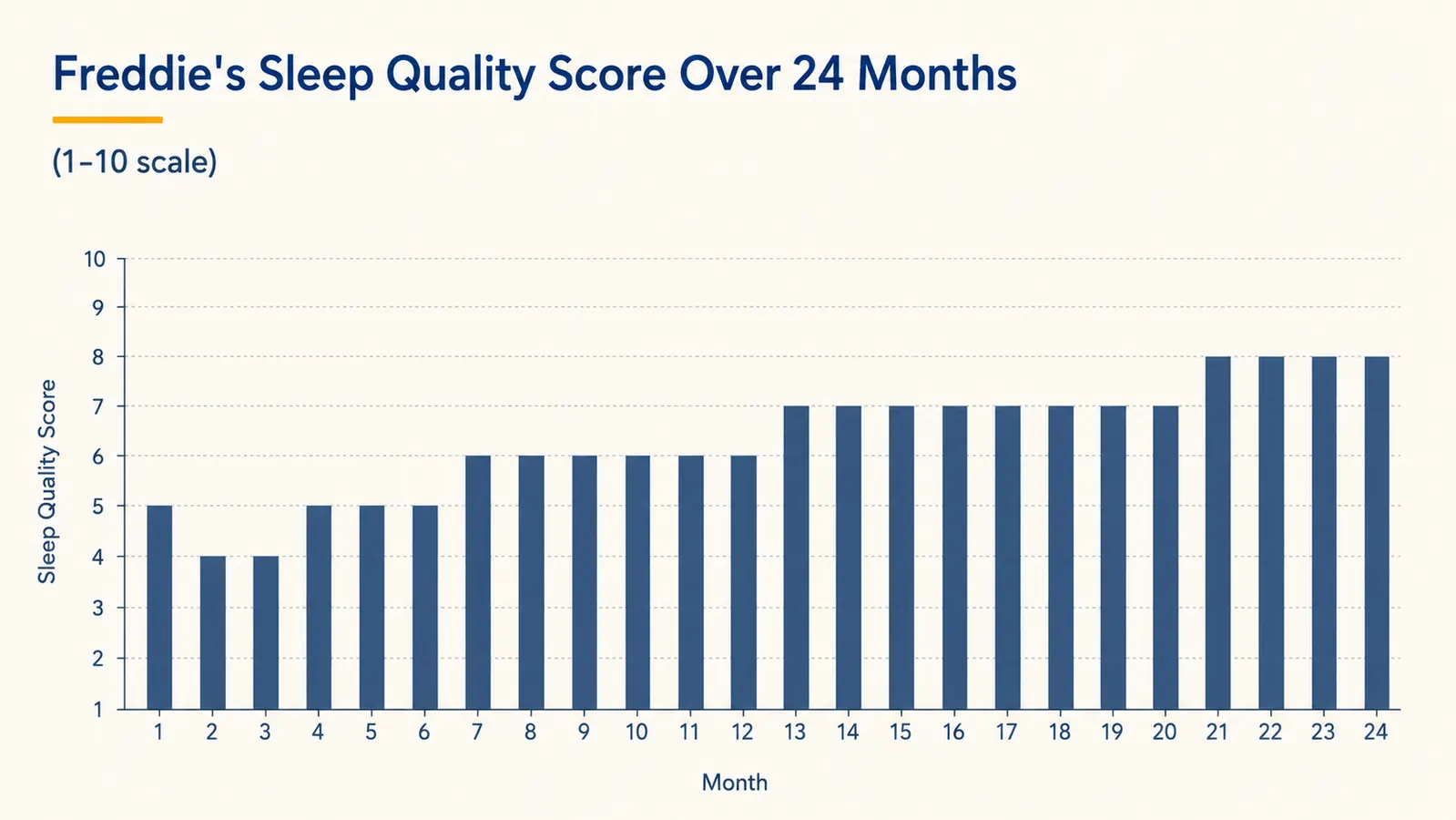
The biggest question I had when I bought the Dohm was whether the motor would degrade over time. Fan motors develop rattle, bearing wear, and resonance as they age. A cheaper machine will start humming at a different pitch, or develop an intermittent click. After roughly 730 nights at an average of eight hours per night, the Dohm's motor sounds to my ear identical to how it sounded in month one. I have no vibration, no rattle, no bearing whine. The motor is simple, and simple mechanical designs tend to outlast complex ones.
The plastic housing has developed minor scuff marks from packing and unpacking during travel. The power cord is fine. The rubber feet still grip the nightstand and do not slide. The top cap and ring adjust smoothly with no sticking or loosening. Two years in, this is functionally a new machine in terms of performance.
One change I did notice around month fourteen: the low-speed setting started to feel less effective at masking sudden sharp noises, like a car horn or a door slam. I switched permanently to the high-speed setting and the problem went away. My working theory is that I adapted to the lower volume level and my brain started listening around it. This is a known phenomenon with white noise, not a hardware issue.
Ingredient and Feature Deep-Dive: What You Are Actually Paying For
The Dohm Classic is a single-function machine. It generates white noise via a real fan motor. It has no Bluetooth, no timer, no app, no memory of your last settings. You plug it in, you twist the knobs until it sounds right, and you leave it running. This simplicity is deliberate. Yogasleep has been making this design since 1962 and has not added features because the core product does not require them.
The motor is a two-speed AC induction motor. AC motors are fundamentally more reliable than DC motors for continuous-run applications because they have no brushes to wear out. The impeller behind the baffle creates the sound, and the two-part housing lets you tune both volume and frequency character by changing how much air escapes and from which direction.
What you are paying for at the current price is reliable, non-repeating, tunable white noise from a company that has made exactly this product for sixty-plus years. You are not paying for a speaker system, a sound library, or a connected app. If you want those features, the LectroFan or a dedicated sound machine app handles them. If you want the real fan sound and you want it to last, this is the machine.

Tradeoffs and Alternatives I Considered
The volume floor on the Dohm is genuinely low. This is an advantage for light sleepers who do not need to blast the machine but want a consistent baseline. The volume ceiling is lower than I would like for truly loud environments, like a motel room next to an elevator or a parking lot. I have been in a few rooms where the Dohm at full high speed was not quite enough to cover the noise and I had to supplement with foam earplugs.
The LectroFan Classic is the obvious comparison point. It is digital, meaning it has a timer, more sound options, and a USB power option that makes it easier to travel with internationally. The tradeoff is the loop issue I mentioned earlier. Digital machines can loop, and for some sleepers that eventually becomes a problem. For others, it never does. If you primarily need volume, flexibility, or travel abroad capability, the LectroFan is worth considering. If you primarily need the natural, non-repeating fan sound, the Dohm wins.
I also tried running just a small box fan for a few months before the Dohm. The box fan worked but it was not tunable, it moved air across the room which changed the temperature noticeably in winter, and it was bulky. The Dohm is essentially a box fan that has been engineered to produce sound without moving air across the room. That is the clearest way I can describe the product difference.
What I Liked
- Non-repeating real fan sound that does not feel like a digital trick after extended use
- Motor still sounds identical after 730-plus nights and shows no degradation
- Low volume floor is genuinely useful for light sleepers in moderately quiet rooms
- Two-part tuning system gives a wide range of tones from the same machine
- Compact and light enough to pack for travel in a standard gear bag
- No buttons to memorize or apps to maintain, just plug in and twist
Where It Falls Short
- Volume ceiling is lower than some environments require, may need earplugs in very loud rooms
- North American voltage only, not usable abroad without a converter
- No timer or auto-off, so you need to manually unplug if you want it to stop
- Only two speed settings, no precise volume dial
- Some sleepers adapt to the volume level over time and need to reset to a louder setting
Who This Is For
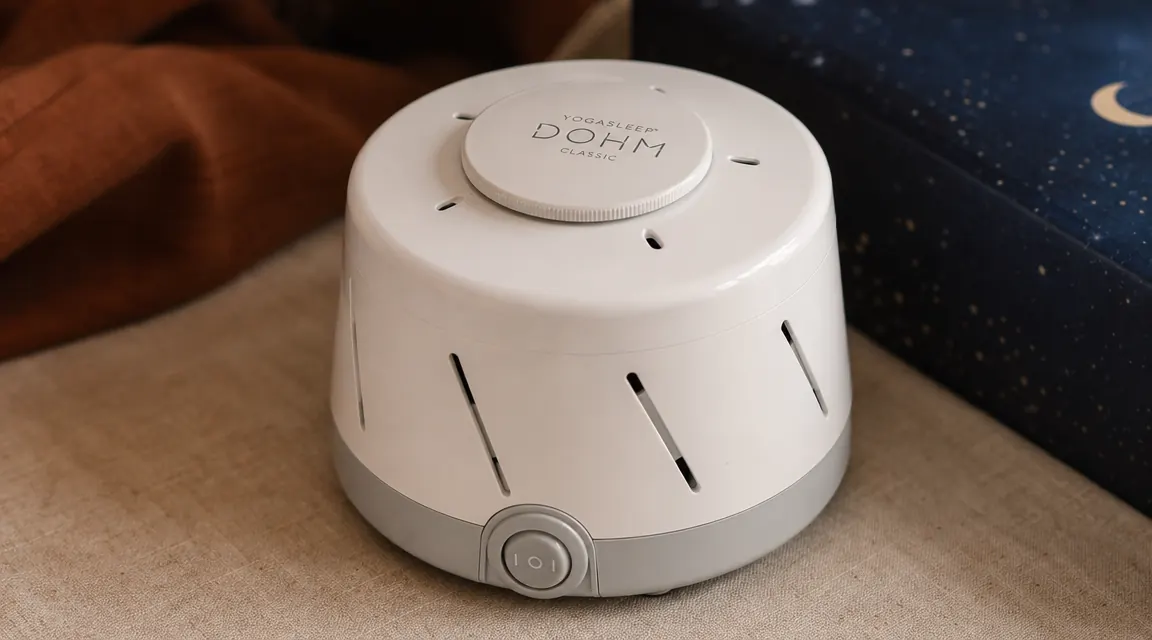
The Dohm Classic is the right machine if you are a light sleeper who wakes up to ambient environmental noise, like HVAC cycling, distant traffic, a partner moving in bed, or the general creaking of an old house. It is also the right machine if you have tried white noise apps and found that they work initially but lose their effectiveness over a few weeks. The real fan sound behaves differently in the brain and tends to stay effective longer. At the current price, it is a reasonable investment for anyone who is serious about protecting their sleep environment.
It also works well for shift workers who sleep during the day and need to cover mid-day traffic and yard noise. I have set it on a low shelf in hotel and motel rooms during daytime layovers and it handles the midday noise environment well on the high setting. If you drive for a living or work irregular hours, this is a machine worth having in the gear bag.
Who Should Skip It
Skip the Dohm if you share a room with someone who is a heavier sleeper and prefers silence. The machine does not have a low-enough volume floor to run completely under normal conversation level, so it will be audible to a person who is not already asleep. Skip it if you travel internationally and need USB power. Skip it if you need a timer because you fall asleep to sound but do not want it running all night. And skip it if your noise problem is sudden impact sounds, like a neighbor slamming a door repeatedly. The continuous masking sound the Dohm produces helps with constant-noise environments, but sharp impulsive sounds cut through it at the standard volume settings.
Also worth noting: the Dohm is not a baby sound machine. It produces white noise specifically, not pink noise, rain sounds, or lullabies. If you are buying for a nursery and want sound variety, look at the Dohm Go or a dedicated baby sound machine with a broader library.
Two years in and I would buy it again without hesitation. If you are losing sleep to environmental noise, this is the fix that actually holds up.
The Yogasleep Dohm Classic has a 4.6-star average from over 40,000 buyers. Check today's price on Amazon and see if it is currently in stock.
Amazon Check Today's Price on Amazon →